
Through the Looking Glass
What Uzbekistan Teaches Us About Seeing Places Clearly

When British journalist Joanna Lillis arrived in Tashkent in 2001 for the tenth-anniversary celebration of Uzbekistan’s independence, she thought she understood authoritarianism. She’d lived through post-Soviet Moscow in the 1990s, watched a state relearn the language of control. But walking through rings of empty buses and trams forming crash barriers around Independence Square—gun-toting officers standing guard while silk-clad dancers twirled under flashing lights—she realized she’d entered different territory entirely.

“It looked more like a military operation than a national celebration,” she recalls in her new book Silk Mirage: Through the Looking Glass in Uzbekistan. “I felt as if I had fallen through the looking glass into a surreal other world.”
That moment—half beauty, half menace—became the organizing metaphor for two decades of reporting. Not just a metaphor for Uzbekistan, though the country certainly earns it. A metaphor for what happens when you travel to a place where surface and reality operate under completely different rules. Where normal is performance. Where reform shimmers like a mirage. Where even cotton, that symbol of progress, conceals new forms of exploitation underneath.
This is what authoritarian states do. They don’t announce themselves with dystopian architecture and grey uniforms. They stage celebrations. They weave silk. They talk about reform while revoking press credentials. They create surfaces that look functional, even beautiful, while the mechanisms underneath run on entirely different physics.
The West, Lillis argues, still sees Uzbekistan through Silk Road clichés—blue domes, deserts, camels, romantic exoticism. Those things exist. They’re beautiful. But treating them as the story is complicity with the performance. It’s choosing the mirage over what’s actually there.
That tension—between surface and reality, performance and truth—is something we explored deeply in my conversation with Joanna Lillis on Wayfinder: Life-Changing Travel.
If you’ve ever wondered what travel looks like beyond the curated surface…
Listen to Wayfinder: Life-Changing Travel here on Apple Podcasts | Spotify | iHeartmedia
Take the cotton story. When Shavkat Mirziyoyev became president in 2016 after twenty-five years of Islam Karimov’s iron-fisted rule, he shocked observers by launching liberal reforms. One of his signature victories: ending state-imposed forced labor in the cotton fields. Real change. A genuine win.
But the deeper Lillis reported, the more she found exploitation persisting in new forms. Farmers coerced into growing cotton for private companies, no bargaining power, same grinding pressure with a different administrative structure. What began as a good-news story turned into another through-the-looking-glass moment. The surface had changed. The machinery hadn’t.
Or consider the blogger she met after his brief imprisonment for a harmless online post. He agreed to the interview but sat at the back of a café terrace, scanning for eavesdroppers, refusing any recording. Not paranoia. Rational survival. The veneer of normality on the surface, terrible things taking place underneath.
Much of what Joanna uncovered across two decades in Uzbekistan is explored in her new book, Silk Mirage: Through the Looking Glass in Uzbekistan—a remarkable portrait of power, performance, fear and everyday life behind the façade.
You can find the book here: Silk Mirage on Amazon

Or the veteran artist Vyacheslav Akhunov, who showed Lillis his subversive sketches from Soviet times—hidden inside a cookbook to evade the KGB. Creativity as contraband. Art as resistance smuggled between recipes.
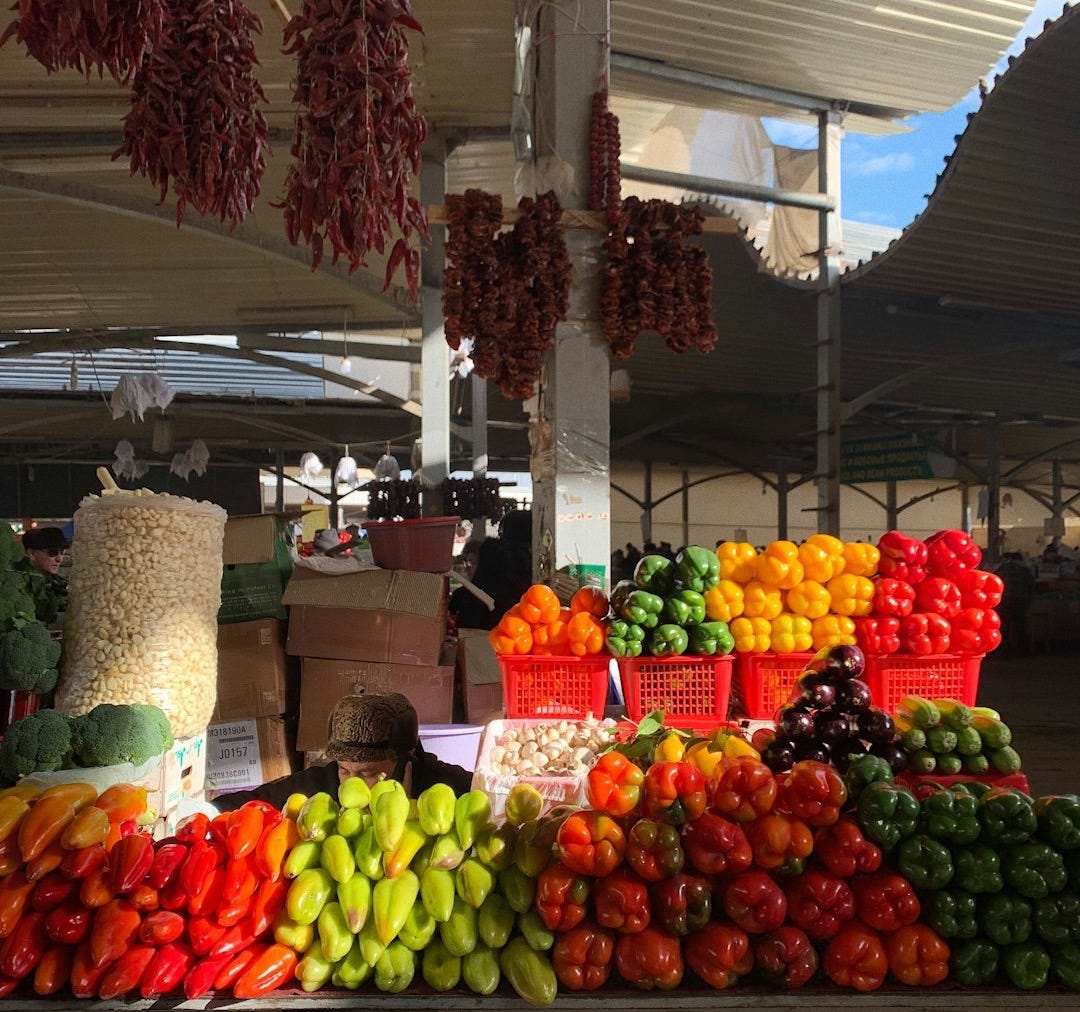
Or Karakalpakstan in 2022, where Lillis was one of the few foreign journalists to reach the region during deadly protests before officials imposed a blackout. She went to bazaars, talked to families waiting outside morgues, people searching for missing relatives. The real story. Not the government’s narrative. Her press accreditation was revoked shortly after and has never been renewed.
This is the texture of life under authoritarian rule that most travel writing—most tourism—never touches. We fly in for a few days, see what officials show us, photograph the blue domes, write about resilience and hospitality and the kindness of strangers. All of which may be true. But it’s not the whole truth. It’s the performance.
What Lillis offers after twenty-four years covering Central Asia—living in Uzbekistan under Karimov, returning repeatedly as an accredited reporter, watching reform flicker and dim—is something harder and more valuable. She sees behind the façade. Not because she’s cynical. Because she’s been there long enough to watch the same patterns repeat. The same clash between reformers and reactionaries. The same yearning for progress meeting the same systemic resistance.
Can’t get enough? Read my piece in Forbes “Joanna Lillis On Seeing Uzbekistan Through The Looking Glass”.

“Uzbekistan today is a better country than it was ten years ago,” she says. “People are freer, even if that freedom is fragile. The challenge now is to stop the backsliding and rekindle the spirit of those early reform years.”
That fragility is the point. The Uzbek Spring—that brief moment when reform felt real—has given way to slick government spin, hyping the positives while covering up the negatives. The system, as Lillis puts it, has a life of its own. The leader might want change. The people might want change. But the machinery itself resists it.
The title of her book captures this perfectly. Silk—particularly ikat, Uzbekistan’s signature fabric—created through a intricate, multi-colored process of dyeing and weaving that produces something beautiful and slightly blurred. Multifaceted. Complex. The mirage: reform that seems tantalizingly close but remains hazy, just out of reach.
This isn’t peculiar to Uzbekistan. It’s what authoritarian aesthetics look like everywhere. Staged normality. Beautiful surfaces. Machinery humming underneath. And travel writing, when it’s lazy or complicit or simply naive, becomes part of the performance. We frame dictatorships as destinations. We write about resilience without naming what people are being resilient against. We admire the silk without asking who wove it or under what conditions.

What Lillis models—what honest travel writing should model—is seeing through the mirage without either romanticizing or reducing. Recognizing the beauty and the repression. The silk and the machinery. The dancers and the crash barriers. The reform and the backsliding. The ordinary Uzbeks—journalists, artists, activists, silk-weavers—who keep probing for cracks in the system where the light gets in.
“I want readers to see the people behind the blue domes,” she says. “Not as an exotic tableau, but as citizens, thinkers and dreamers navigating an authoritarian state.”
That’s the work. Not falling through the looking glass. Seeing clearly what’s on both sides of it.
Travel that tells its own story
Turn travel time into discovery time. Autio transforms travel with location-based audio stories that automatically reveal the secrets beneath your feet.
23,000+ narratives voiced by Kevin Costner and other legends
Works across America, Europe, and beyond—even offline
Hands-free discovery on road trips, hikes, and urban adventures
First five stories free when you download
Every place has a story. Now every story has a place.
Download Autio here and start listening for free
So if you’re planning to go Uzbekistan—and you should—here’s how to do it without becoming part of the performance.

When: Spring (April-May) and autumn (September-October) are ideal. Summer in Tashkent and the Fergana Valley hits 40°C regularly, which is manageable if you’re acclimated but punishing if you’re not. Winter (November-February) can be bitterly cold, especially in Samarkand and Bukhara, though the light on those blue domes in winter is extraordinary. Autumn gives you harvest season, manageable temperatures, and fewer tour groups clogging the Registan.
Where: Yes, Samarkand and Bukhara are essential—the Registan, Shah-i-Zinda, the old town of Bukhara with its labyrinthine streets and functioning madrasas. They’ve earned their reputation. But don’t stop there. Tashkent is worth more than a transit day—Soviet brutalism meets contemporary Central Asian capitalism, plus some of the region’s best food. The Fergana Valley (Margilan, Kokand, Andijan) offers silk workshops, ceramics, and a slower pace. Khiva feels like a film set, which is both its charm and its problem—it’s been so thoroughly restored it borders on Disneyfication, but the desert light and the city walls at sunset are still worth it. And if you can reach Karakalpakstan and the Aral Sea, the environmental catastrophe is sobering and necessary viewing.
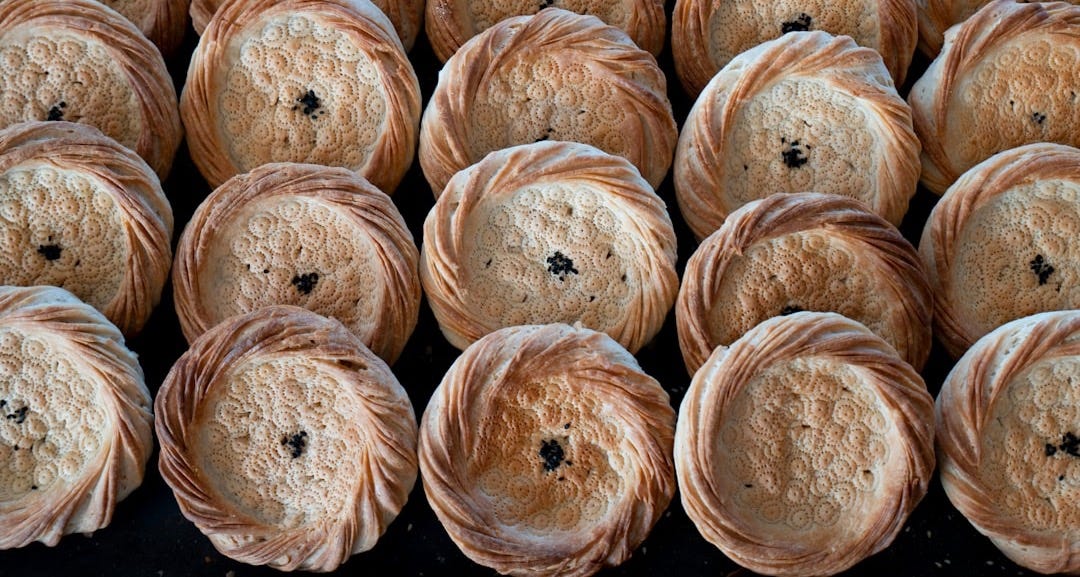
How to engage: Hire a local guide, but choose carefully. The state-approved guides often work from a script. Ask your hotel, ask other travelers, look for someone who’ll take you to a neighborhood teahouse rather than just the monuments. Learn a few words of Uzbek or Russian—it changes interactions immediately. Eat where locals eat. The plov (pilaf) in Tashkent is a religion; the bread from a tandoor oven is still warm when you buy it from a street vendor. Accept invitations for tea if they’re offered. People are extraordinarily hospitable, and those conversations—away from official channels—are where you’ll glimpse what Lillis writes about.
Independent vs. organized: Uzbekistan’s infrastructure has improved dramatically under Mirziyoyev. You can book trains online, navigate cities with ride-sharing apps, stay in guesthouses and small hotels that aren’t part of the state tourism machine. Independent travel is entirely feasible and gives you more control. That said, organized tours can unlock access—particularly in more sensitive regions or for logistical challenges like the Aral Sea. I’d point you toward Remote Lands for this. They understand the region, they don’t do the sanitized version, and they can get you into places that are legitimately difficult to reach independently without turning the whole thing into a five-star performance piece. Ask questions regardless of who you travel with. Push back on the sanitized version. Request time in markets, neighborhoods, workshops. Insist on it.
The point isn’t to avoid the blue domes or the silk. It’s to see them and the people who live in their shadow. To recognize the beauty without erasing the cost. To travel as witness, not as tourist complicit in a carefully staged production.
I spoke with Joanna Lillis about all of this—about two decades witnessing Uzbekistan’s cycles of hope and repression, about courage under pressure, about what it means to report from places where the truth doesn’t fit the government’s narrative - for the latest episode of Wayfinder: Life-Changing Travel.
Listen to the episode here - Wayfinder: Life-Changing Travel here on Apple Podcasts | Spotify | iHeartmedia
And if this story resonates, Joanna’s book Silk Mirage: Through the Looking Glass in Uzbekistan is ready to bring you further into life in Uzbekistan.
Seeing places clearly starts with how we see ourselves. Uzbekistan as a mirror for our own capacity for connection is exactly why we travel 'without maps' to find what truly matters.