

If You’re Not Reading Without Maps,
You’re Only Getting Half the Story
Paul Theroux the travel writer is the one you hear on the podcast I host, Wayfinder. Paul Theroux the traveler is the one you meet here.
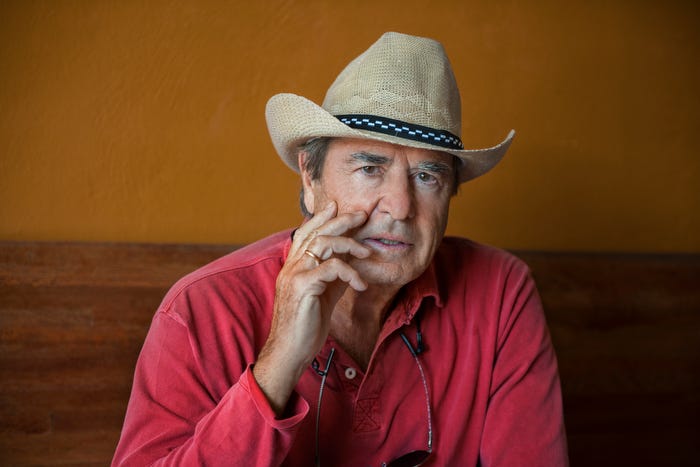
Like I’ve been saying, if you’re not reading Without Maps, you’re only getting half the story.
Paul Theroux has written more than 50 books, including novels, travel books and collections, and The Great Railway Bazaar remains one of the great detonations in modern travel writing. There’s The Mosquito Coast, Riding the Iron Rooster, Deep South and now True North: On the Road in Canada, his latest journey, which lands September 22.
He lives between Hawai‘i and Cape Cod. His secret to happiness, he once told me, is to have two homes. Yes Paul, I listened to you.
He is, in many ways, old school. Probably the most famous living travel writer. He is also hilarious, deeply curious, a gentleman with a slightly naughty glint and the kind of person who can turn a question into an entirely different conversation. I had him on Wayfinder, my podcast about life-changing travel (Apple and Spotify), and we talked for far longer than the 45 minutes that eventually made it into the episode.
That is the problem with editing. You lose things. The little stories. The digressions. The things that happen when someone gets comfortable enough to stop giving you the polished version. The things that don’t quite fit the shape of an episode. So this is the rest of it.
The podcast is about Paul Theroux the travel writer. This is about Paul Theroux the traveler.
And, occasionally, about what happens when Paul Theroux turns the question around and starts interviewing you.

The man who became a travel writer because he ran out of things to write about
The mythology around Paul Theroux tends to begin with The Great Railway Bazaar, which makes sense. It is the book that changed his life and, arguably, helped change the way an entire generation thought about travel writing.
But the story begins earlier. Paul had already written six novels. He was living in London and had discovered, somewhat dramatically, that being a writer did not necessarily mean having anything left to write about. Then came the idea of leaving.
He went away and eventually wrote The Great Railway Bazaar. When he returned to London in January 1975, his life was in chaos. His marriage was in trouble. His wife had a boyfriend in the house. Paul was depressed and in debt.
Then he wrote the book. It took off. He came home from his travels having discovered something that sounds obvious now but was fairly radical at the time: you could travel and write about what happened to you along the way.
As Paul put it, “You can leave the house and find a subject for a book.” That sentence contains almost the entire philosophy of travel writing. Just leave the house. The rest will follow.
The problem with belonging
This is where our conversation took a turn I hadn’t expected. Paul had been talking about Africa and the experience of becoming a traveler, about Joseph Conrad’s famous line that he was “a mere animal” before going to Africa. I interrupted him.
“What does it make for me?” I asked. “I was born in Africa.” Paul paused.
“Well, you have a complex fate as a white person born in Africa.” That sentence stayed with me.
Because he wasn’t talking about travel in the abstract anymore. He was talking about the particular weirdness of being born somewhere and simultaneously carrying a history that makes belonging complicated.
“You belong but you don’t belong,” he said. “And you’re rejected, you’re the white African.”
Then he laid out the history that comes with that identity: white oppression, apartheid, colonialism, racism. The fact that being born in South Africa means inheriting a history you didn’t create but cannot pretend isn’t there.
“You have to deal with that,” he said. He brought up Nadine Gordimer, who dealt with it by staying. Then he looked at me and said, “You dealt with it by going away.”
He pointed out the other pieces of my history that complicate the story: being white, growing up with an element of privilege and, of course, being gay. None of those things, he said, exist in isolation. They become part of the making of a person.
He started talking about the way identity accumulates, how one history sits on top of another. Jung, he said, described life as a zigzag rather than a straight line. The individuation that creates a personality isn’t linear.
“Deal with it by writing about it, to try to understand - that’s the making of you as a writer.”
It is an uncomfortable idea, particularly for travel writers. We spend so much time looking outward that we can become very good at avoiding the things sitting directly behind us.
Paul had just spent much of the conversation explaining how becoming an outsider helped make him a writer. Now he was suggesting that my own complicated relationship with where I came from might be part of the same equation.
He had a similar relationship with belonging.
In England, he never felt that he belonged. When he wrote The Kingdom by the Sea, he deliberately turned the gaze around, writing about the English as foreigners, the way travel writers traditionally write about everyone else.
The English would call him “a Yank.” In the American South, he was a Yankee. In Singapore, he was the outsider. In Uganda, he lived for four years, spoke Swahili, had friends and taught at Makerere University. He felt settled.
Then one day a demonstration erupted. An Indian man on a motorcycle told Paul they were going to kill him and urged him to back up. Paul was in the car with his pregnant first wife. About 500 people came down the road and surrounded the car, breaking its windows.
The car, Paul realized, was symbolic. “The white man’s burden, the car.” An Indian shopkeeper, Mr. Patel, pulled them to safety. The crowd destroyed the car. And Paul suddenly understood something he’d been resisting. He had thought these were his students. His friends. He had thought he belonged. “I don’t belong here,” he told himself.
He went to the university chancellor and said he was leaving. When asked why, he told him he had lost faith in his students and the university. “I don’t belong. I’m just a white guy.” Later, in Singapore, his son Louis was described as ang mo, a white foreigner, essentially a “redhead devil.” All his life, he said, people had reminded him that he didn’t belong. And that, he believes, can be useful to a writer.
“To go to a place where you belong, that’s kind of unusual,” he said. “But to go to a place where you don’t belong is almost the key to be able to write about it, because then you’re hanging by a thread.”
You have to love that he of course turned that idea back toward me.
Paul had been talking about Canada, where he had discovered something rare: belonging. Both his grandparents were born there. His father had gone there constantly. He could potentially get a Canadian passport. That was different.
“This is why, Daniel, I’m advising you, write about South Africa.”
I laughed.
“You belong there,” he said. “You have a connection to South Africa.”
He pointed out that my parents still live there. That I have the languages. That I have the history. “It’s so rare to find a South African who goes back and writes about it.” I told him I didn’t necessarily feel a sense of belonging there. “You may not have a sense of belonging,” he said, “but you have an understanding that no one else will have.” Then, more directly: “I urge you to do it.” The irony is that this is precisely the kind of advice that is easy to give someone else and incredibly difficult to take yourself. Because South Africa is not an easy place for me to write about.
It is home in the technical sense. It is where I was born. It is where my parents still live. It is somewhere I know intimately and, simultaneously, somewhere I left. There are the obvious questions of race and apartheid and privilege. There is the strange position of being a white South African who grew up inside a system that granted privilege while also growing up with the knowledge that the system itself was indefensible. (You can read my other writings on South Africa here, and here, and here.
There is the question of what leaving means. There is the question of what coming back means. And there is the more uncomfortable question of whether you can ever return to a place you left behind without rewriting the person who left. Paul didn’t pretend he had an answer for me. He simply said: this is your material.
“You need to find a subject that no one’s written about, an angle that no one has attacked.” Then he called me the white crow. “You’re the one white crow that proves not all crows are black.”
He was talking about the usefulness of not fitting neatly into a category. About being the person who has one foot inside and one foot outside. About the strange authority that comes from understanding a place while simultaneously being unable to claim uncomplicated belonging to it. And then he went back to his own story. Because that’s what good storytellers do. They give you something uncomfortable and then make you keep thinking about it.
The rarest thing in travel
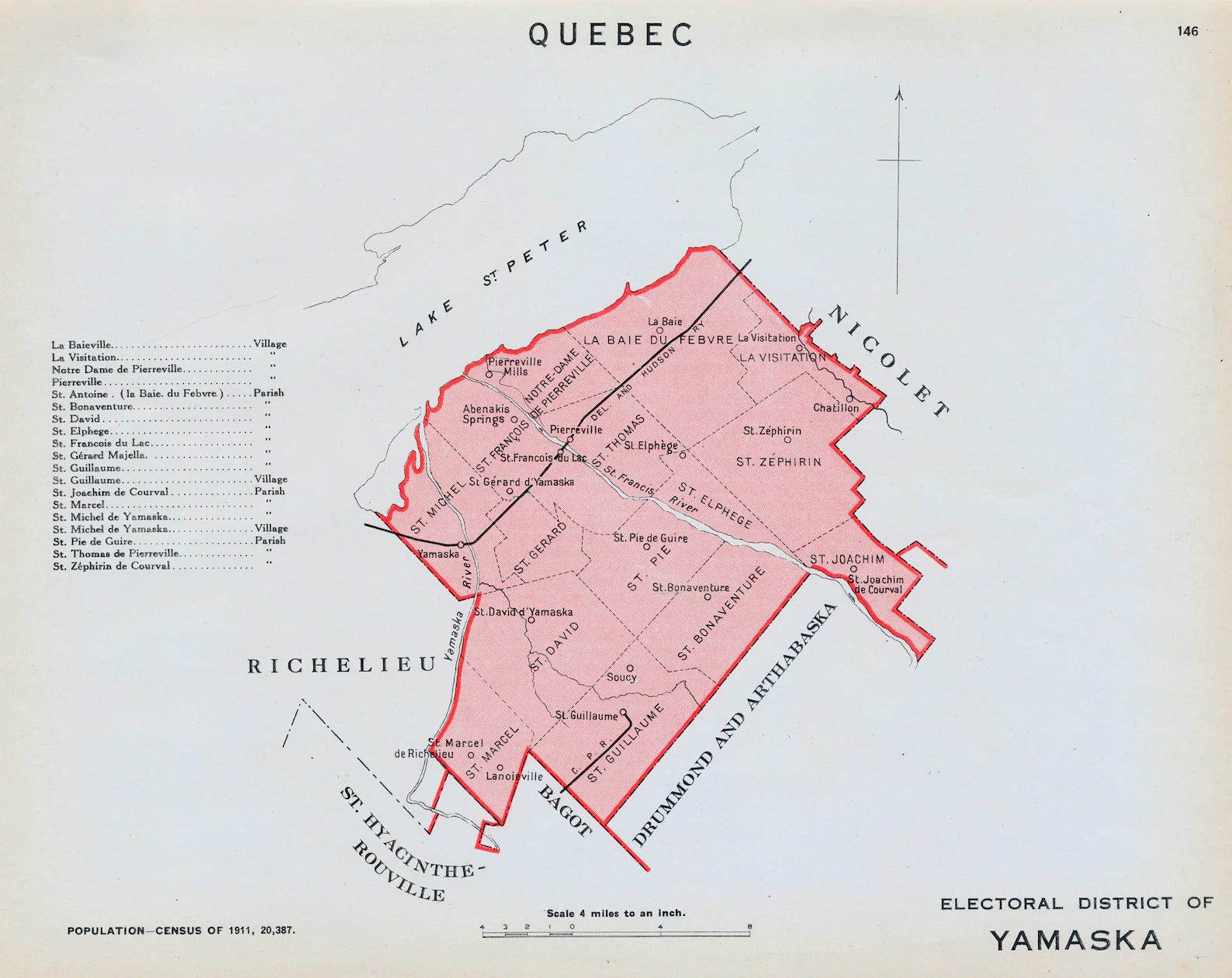
Paul’s experience in Canada was almost the opposite. He was writing about belonging. His grandparents had been born there. His family name existed in Yamaska. He had a history in the place that went beyond being a visitor with a notebook. And that made Canada unusual. Most of the time, Paul said, he is the outsider. In Canada, he could imagine being something else.
That distinction matters because travel writing often depends on distance. You see more clearly when you are slightly removed. You notice the habits, contradictions and peculiarities that locals have stopped seeing.
But there is another kind of travel, too. The kind where the distance begins to disappear.
The sugar shack
One of the most revealing moments in True North happens at a cabane à sucre outside Sorel. The mayor of Yamaska wanted to welcome Paul properly, so she took him to a sugar shack, where maple syrup is collected and boiled.
The meal was supposed to be traditional Québécois Christmas food.
Paul asked if there would be turkey.
“No, no turkey.”
There were meatballs, custard, vegetables and a pancake. But the food wasn’t really the point. There were distant relatives there. People with Paul’s name. The mayor was related to the aristocrat who had founded Yamaska generations earlier. Paul had brought his books in French. Everyone at the lunch had read them. One man told him he had nothing to do with English society. He lived entirely in a French, Québécois world. And Paul suddenly felt something he doesn’t often feel.
“I belong.”
When I asked what the emotion was, he said it was safety. Belonging, in his telling, wasn’t about being able to produce the correct passport or pronounce the local street names. It was the feeling that nobody was going to chase you away.
And when people feel safe, Paul said, they listen. They talk. They stop lying to you. They talk to you as family. That may be one of the most useful definitions of belonging I’ve ever heard.
“You’re giving away my magic”
It also explains why travel writers should be careful about assuming that access equals trust. Paul told me about a man he met in Vanuatu who refused to share a story with him.
“If I’m telling you something, I’m giving you my magic,” the man said. “And I don’t wanna give you my magic.”
Paul’s response was essentially: fine. He would write about the refusal. The refusal itself became the story. That distinction matters. Sometimes the most honest thing a traveler can do is admit that someone doesn’t want to give you access to their world.
I told Paul about an Indigenous elder I’d met in the Pacific Northwest who had told me that everything she had said to me was a lie because she didn’t trust me. That opened another conversation about Hugh Brody, the English anthropologist who spent a year learning Inuktitut among traditional Arctic communities. The people he lived with told him that they would only tell him the truth in their own language. So he learned it. There is a rebuke in that for travel writers who arrive with a translator, take notes, ask questions in English and then wonder why the answers feel incomplete. Sometimes the problem isn’t the place.
It’s us.
The luxury of having nowhere to sleep
Paul’s approach to travel is considerably less controlled than mine. When he crossed Canada, he generally didn’t book his next hotel. Toronto was the exception. Otherwise, he would arrive somewhere and ask for a room. He likes the freedom of it. We talked about this because the day after our conversation, Michael and I were leaving for a road trip through France. Every hotel was booked. Every night had a destination. I admitted that part of me wanted to do the opposite: drive around France for a month and simply see what happened.
Paul understood.
He has crossed the United States eight times without booking rooms. Once, in a Texas oil town, there were no rooms at all. Eventually he found a terrible one. His wife asks the practical questions: Where are we going to stay? Where are we going to eat?
Paul’s answer is essentially: we’ll be all right.
“It’s always a leap in the dark,” he told me. “And you think, ‘No matter what happens, I’m gonna be all right.’”
Usually, he said, it is.
Sometimes it isn’t. But when it isn’t, you have something to write about. That is a very Theroux philosophy of travel. The point isn’t to eliminate uncertainty. The point is to discover that you can survive it. It’s the same reason the best travel often begins once you stop letting the algorithm plan everything for you.
The story you don’t want to miss
There is another story in True North that I couldn’t leave out. While Paul was in Yamaska, a local painter told him about a woman named Sylvie Theroux. She had been born in Quebec, was related to Paul and had gone to Paris, where she became one of Amedeo Modigliani’s lovers. She had a son, Serge, with him, who died young.
Paul wasn’t sure he believed the story. So he checked. Someone else in the village confirmed it. There are also Theroux family stories that go in completely different directions, including a Theroux who became a jazz and lounge singer. This is the kind of rabbit hole that makes travel writing addictive. You arrive looking for one story and the place hands you another.
A letter from Yamaska
Near the end of his travels, Paul received a letter from André Parenteau in Yamaska. One sentence stayed with him:
“There are no silly questions when you want to learn.”
Yamaska is a small place, roughly 1,600 people, where old founding names still sit in the landscape: Parenteau, Mondou, St-Germain, Léveillé, Theroux. But the village Paul returned to isn’t frozen in the past. Most of the old farms are gone. Children have left for Montreal, Sorel and Drummondville. Large-scale agriculture has replaced many of the smaller farms. Old houses are being bought by Chinese, Haitian, Arab and African families. New streets are appearing. Yamaska is becoming, in some ways, a suburb of Montreal. That is what makes the book more interesting than a simple return-to-roots story. The place is changing while Paul is trying to understand his connection to it. Home doesn’t wait for you.
Canada, according to Paul Theroux
Paul’s Canada is also political. He points to the country’s abolition of capital punishment, universal public healthcare, stronger reproductive-rights protections, stricter gun laws and government funding for the arts. He sees Canada as a mosaic, an archipelago of cultures and communities. Montreal and Quebec City are the obvious starting points. There is culture, food, music and a kind of musical renaissance Paul associates with artists such as Lhasa de Sela.
But he wants you to leave the cities.
Rent a car.
Drive.
Go to the smaller places.
Yamaska itself isn’t exactly a culinary destination. Paul told me the only café worth mentioning is at the hockey rink on Rue Terrou.
For Newfoundland, his advice is to drive to Cape Breton, take the overnight ferry and then drive around the island. The food is simple and fabulous. Fish. Lobster. Fresh vegetables. There are accents that change from place to place and the history of the Vikings at L’Anse aux Meadows.
And then there is Vancouver, which Paul calls a “city of the future,” with Chinese, African, Indian and Filipino neighborhoods and what he describes as an “ethno bubble.” The food is extraordinary. And then you drive toward the Rockies. The arrival itself becomes part of the experience.
The place you actually want to return to
This may have been my favorite thing Paul said. There are very few places where he has left wanting to return.
Mexico.
Italy.
Canada.
The American South.
Tibet.
That’s it.
And the reason he wants to return isn’t because he has another book to write. It is because there are people he wants to see. Food he wants to eat. Places he wants to know more deeply. He wants to expand his experience, to “fatten my soul” with something new. That is a very different definition of travel than collecting destinations. Most of us spend our lives accumulating places. Paul is talking about accumulating reasons to return. He told me that when you find a country where you want to go back, where you feel safe and where you know there is more to discover, you should hold that place to your heart.
“It will change your life.”
South Africa, by contrast, gave him the opposite feeling.
“I never felt welcome there,” he said.
“I always felt, I’m... This is a job. This is a job.”
And then he said it again.
“I had the feeling in South Africa, to tell you the truth.”
That landed differently because of what he’d said to me earlier.
He had just spent an hour explaining the value of the outsider.
Now he was describing what it feels like when the place you come from never quite feels like yours. And then, almost casually, he returned to me.
“I think that’s your subject,” he said.
“The subject that you’ve been hiding from, and maybe... eluding.”
He stopped himself.
“Not hiding, but maybe one that you’ve been eluding.”
Then he gave me an escape hatch.
“But that’s for you to decide.”
Of course it is. But I’m still thinking about it.
And then he told me to listen

At the end of our conversation, I asked Paul for the advice he would give future travelers to Quebec. His answer was beautifully simple.
Stay as long as you can. Visit Montreal and Quebec City. Then go somewhere smaller. Definitely go to the smallest neglected town or village. Make a friend. Try to learn some Québécois French. Be humble. Be inquisitive. And listen. (That may be as close as anyone gets to defining what it means to be a good traveler.)
He told me about André Gide’s The Counterfeiters, in which a character is told he will never be a writer because he doesn’t listen. For Paul, that is also the key to travel. Listen. Don’t arrive assuming you already understand. “Don’t be an ugly American,” he said. “Don’t be a foreigner.” And then the part I keep coming back to: “If you make a friend, you’ll be welcomed back.” That, in the end, may be the entire Theroux philosophy. The key to a country isn’t standing outside it and photographing it. It’s friendship.
It’s finding someone who wishes to know more about you and whom you wish to know more about. It’s listening. It’s staying long enough for the place to stop being a backdrop and become somewhere you might actually want to return to.
And maybe that’s the difference between seeing a place and traveling through it.
The journey doesn’t stop when the episode ends. The full Wayfinder conversation with Paul Theroux is live now wherever you get your podcasts. And if you’re not reading Without Maps, you’re only getting half the story.
Follow @wayfinderpod on Instagram so you never miss an episode.